Introduction
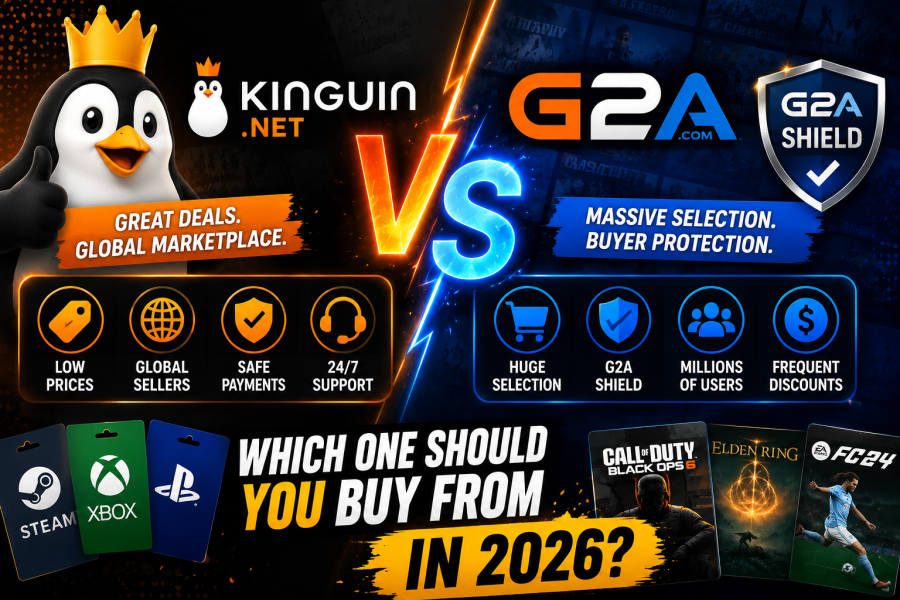
Kinguin and G2A are the two biggest third-party marketplaces for cheap game keys, software licenses, and gift cards, and shoppers comparing prices almost always end up asking the same question: Which one is actually better?
Both platforms operate on the same core model, independent sellers listing keys, the marketplace handling payment and dispute resolution, but there are real differences in pricing, buyer protection, and overall user experience. This guide compares them side by side so you can decide which one fits your next purchase.
How Kinguin and G2A work
Both platforms are marketplaces, not direct retailers. That means:
- Sellers list their own keys and set their own prices
- The platform processes payment and takes a commission
- Buyer protection is available as an optional add-on, not built in by default
- Prices vary listing to listing, even for the exact same game
The core difference isn’t the model itself, it’s how each platform enforces seller quality and handles disputes when something goes wrong.
Pricing: Who is cheaper?
Neither platform is consistently cheaper across the board. Instead, pricing depends on the specific title, seller stock, and regional key availability at any given moment.
- On newly released AAA titles, Kinguin and G2A are typically within a few percent of each other.
- On older titles and software licenses (Windows, Office), pricing can swing more noticeably in either direction depending on which sellers currently have stock.
- Gift cards tend to be priced similarly on both platforms, since margins are thinner.
Practical tip: If you’re after a specific title, check both platforms side by side before buying rather than assuming one is always cheaper.
Buyer protection: Kinguin Buyer Protection vs. G2A Shield
Both platforms offer an optional paid protection add-on:
- Kinguin Buyer Protection: Covers invalid, already-used, or non-working keys with a refund or replacement, added at checkout for a small percentage fee.
- G2A Shield: A similar add-on covering key issues, often bundled with additional perks like faster support response times.
Neither platform includes this protection by default, which is the single most important thing to understand before buying from either one. Skipping it to save a dollar or two is the most common reason buyers end up frustrated on both platforms.
Seller quality and ratings
Both marketplaces display seller ratings and completed sales counts, and the advice is identical for each:
- Stick to sellers with a 95%+ rating
- Prefer sellers with thousands of completed sales over brand-new accounts
- Read recent buyer comments on the specific listing, not just the seller’s overall score
Neither platform is inherently “safer” in this regard, since safety comes down to which individual seller you choose, not the platform itself.
Customer support and dispute resolution
This is one area where user experience reports vary. Both platforms offer ticket-based support and a dispute process tied to the protection add-on. Response times can vary by season (support tends to slow down during major sales events on both platforms), so buyers with protection added tend to report faster resolutions than those without it, regardless of which marketplace they used.
Kinguin vs G2A: Quick comparison table
| Feature | Kinguin | G2A |
|---|---|---|
| Pricing | Competitive, varies by title | Competitive, varies by title |
| Protection add-on | Kinguin Buyer Protection | G2A Shield |
| Seller model | Third-party marketplace | Third-party marketplace |
| Regional key availability | Yes, varies by listing | Yes, varies by listing |
| Software licenses (Windows/Office) | Widely available | Widely available |
| Best for | Buyers comparing every purchase individually | Buyers comparing every purchase individually |
Frequently asked questions
Is Kinguin better than G2A? Neither is universally better: Pricing and stock vary by title, so it’s worth checking both before a purchase, especially for higher-value items like software licenses.
Is it safe to buy from either platform? Yes, when you choose highly-rated sellers and add the platform’s buyer protection add-on. Both marketplaces have processed millions of transactions since launch.
Do Kinguin and G2A sell the exact same games? Largely yes, since both source from overlapping pools of third-party sellers, though individual listings and stock levels differ.
Should I always add buyer protection on both platforms? Yes, especially on higher-value purchases or when buying from a seller without an extensive sales history.
Final verdict
There is no single winner between Kinguin and G2A: Both operate on the same marketplace model, offer similar protection add-ons, and depend on seller quality more than the platform itself. The best approach is to compare the specific title or license you want on both sites, check seller ratings, and always add buyer protection before completing checkout.